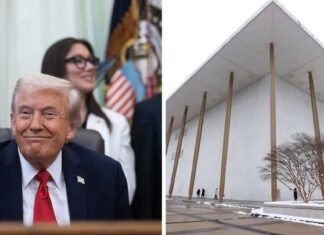
The prospect of American troops deploying on U.S. soil is no small matter, and President Donald Trump made that clear this week when he openly threatened to invoke the Insurrection Act in response to escalating unrest in Minnesota. As protests surrounding federal immigration enforcement continue to spiral in Minneapolis, Trump’s warning signals that the standoff between Washington and Minnesota’s political leadership has entered a far more serious phase.
The Insurrection Act of 1807 grants the president sweeping authority to deploy active-duty military forces or federalize the National Guard to suppress civil disorder when state and local authorities are unable or unwilling to restore order. It is one of the most extraordinary emergency powers available to the executive branch, and it is rarely used for precisely that reason. Trump’s message on Truth Social left little room for ambiguity. If Minnesota’s leaders do not stop what he called “professional agitators and insurrectionists” from attacking ICE agents, he said, he will act.
That warning comes amid intensifying clashes in Minneapolis following the fatal shooting of Renee Nicole Good last week and a second ICE-involved shooting days later. In the most recent incident, a Venezuelan national was shot in the leg after allegedly assaulting a federal agent during a traffic stop.
According to the Department of Homeland Security, the officer was attacked with a broomstick and a snow shovel while attempting to make an arrest. Federal agents have since faced nightly confrontations involving fireworks, tear gas, and flash bangs as protests stretch on.
Local officials have not helped cool the situation. Governor Tim Walz has repeatedly described the federal presence as an “occupation,” accusing ICE of “kidnapping people for no reason.” Minneapolis Mayor Jacob Frey has echoed that rhetoric, calling the situation unsustainable and condemning federal enforcement efforts outright.
To the Trump administration, those statements amount to more than political disagreement. Deputy Attorney General Todd Blanche went so far as to accuse Walz and Frey of inciting an insurrection themselves, arguing that their words are fueling the violence rather than restraining it.
Historically, the Insurrection Act has been invoked during moments of extreme national stress. Thomas Jefferson signed the original law to suppress the Burr Conspiracy. It was expanded during the Civil War and Reconstruction to deal with rebellion and the breakdown of civil order. In the 20th century, presidents used it to enforce desegregation during the Civil Rights Movement and, most recently, in 1992 when George H.W. Bush deployed troops to Los Angeles during the Rodney King riots.
Trump’s threat places Minnesota uncomfortably close to that historical company. Whether he ultimately federalizes the National Guard or deploys active-duty troops remains unclear. What is clear is that the administration believes civilian authorities are failing to control the unrest, and patience is wearing thin.
Invoking the Insurrection Act would be an extraordinary escalation, but so too is the level of disorder unfolding in Minneapolis. As federal agents face sustained attacks and political leaders continue to delegitimize enforcement, the situation is testing the limits of federal restraint. The question now is whether Minnesota’s leaders can regain control — or whether Washington will decide that they no longer can.